





Plumbed to the house line
Gas Fire Pits
Natural gas and propane fire pits for patios, pool decks and outdoor living rooms — instant flame at the turn of a key, no smoke, no embers to chase.





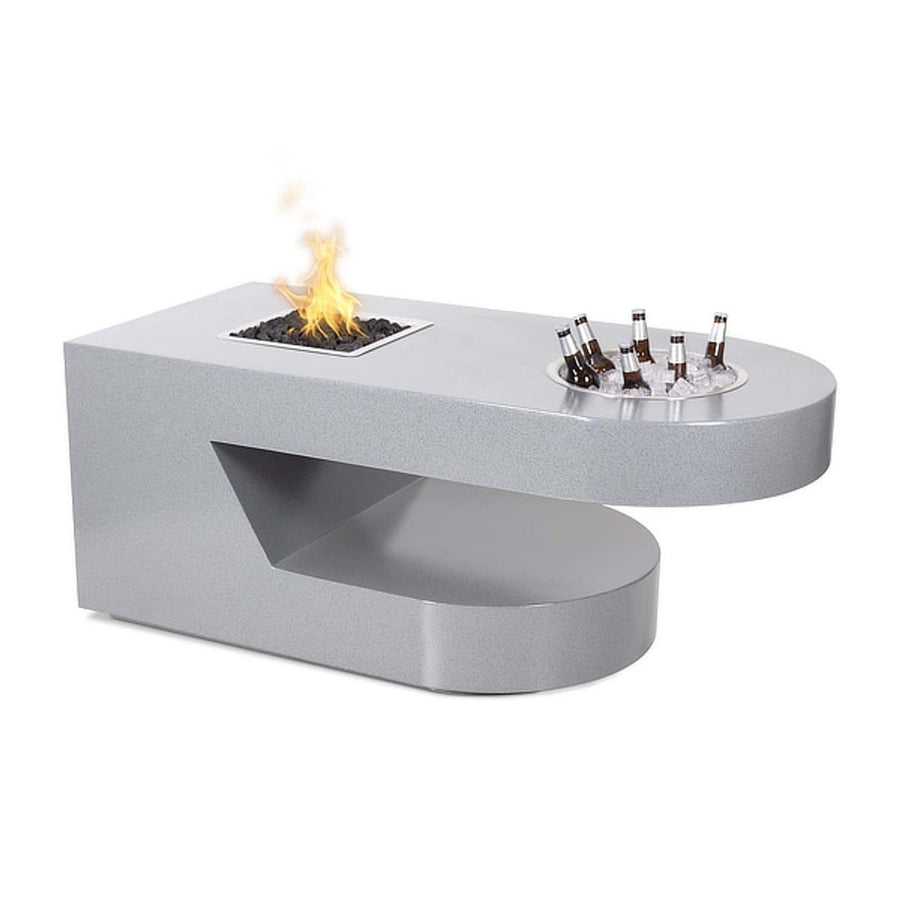


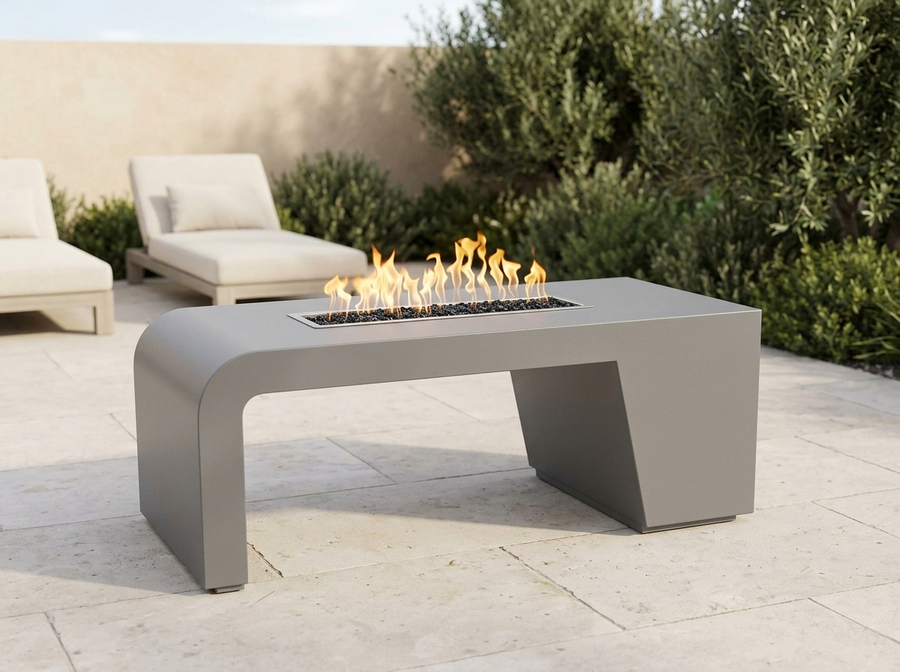


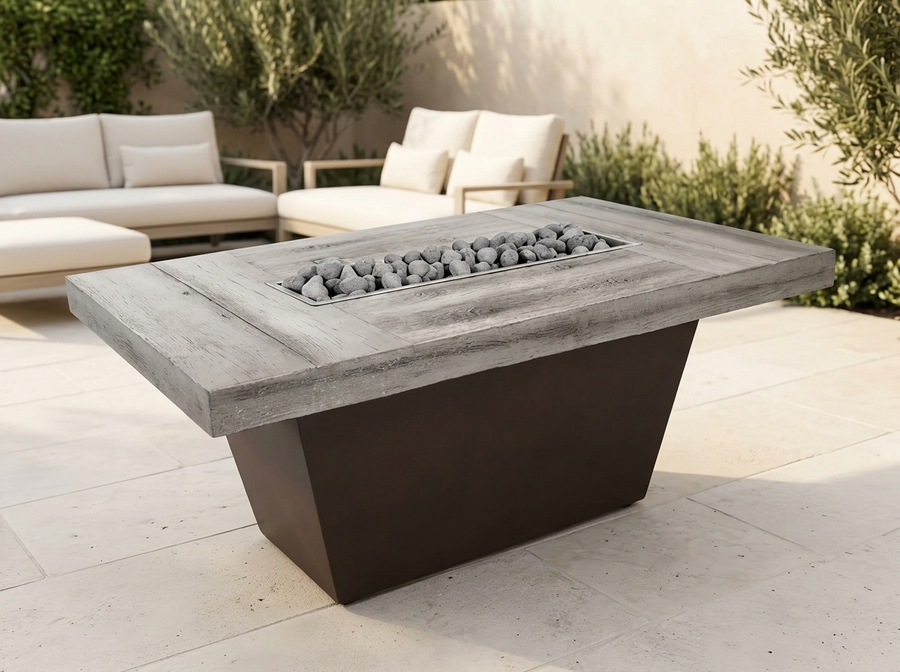


Showing 175 of 175 fire pits
Buying guide
Natural gas and propane fire pits for patios, pool decks and outdoor living rooms — instant flame at the turn of a key, no smoke, no embers to chase. We carry 114+ models from American Fyre Designs, The Outdoor Plus and Prism Hardscapes, from sculptural round fire bowls to long rectangle fire tables built for seating walls.
Natural gas or propane?
If your home has a natural gas line, an NG fire pit is the set-and-forget choice — no tanks to swap, lower cost per hour of burn. Propane (LP) models give you placement freedom anywhere on the patio; many designs hide a standard 20 lb tank inside the enclosure. Most of our fire pits are available in both fuel types — select yours in the order form, and if you're not sure which you have, call us before ordering.
Shapes and materials
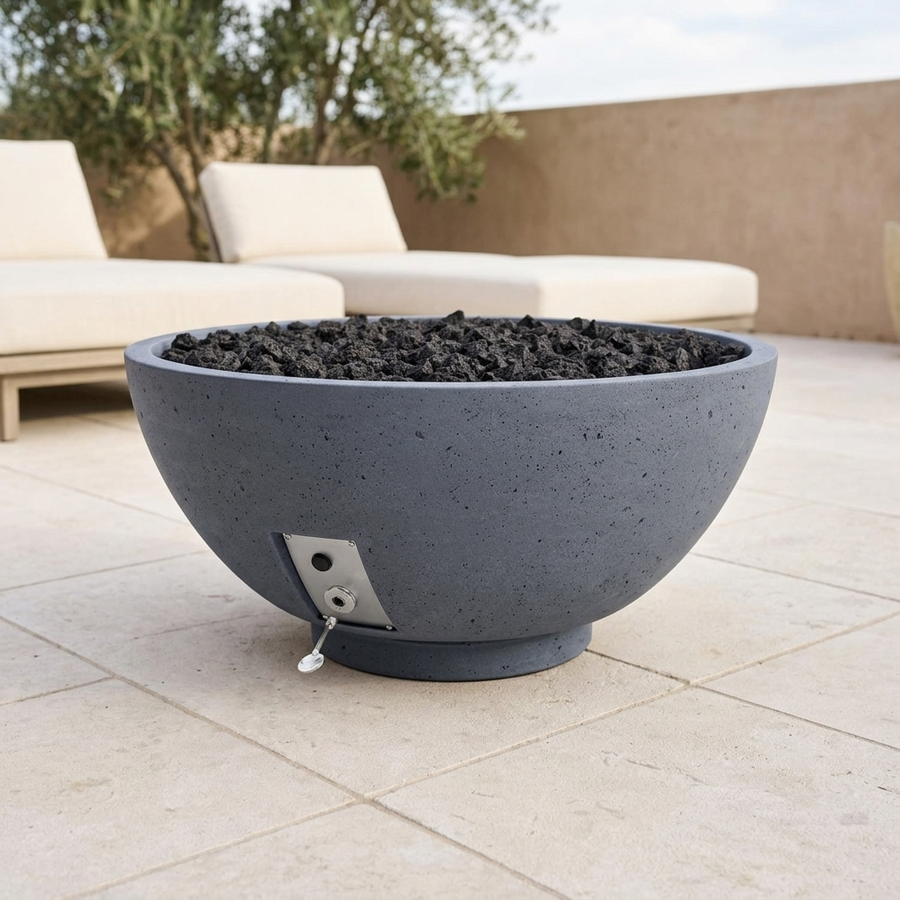
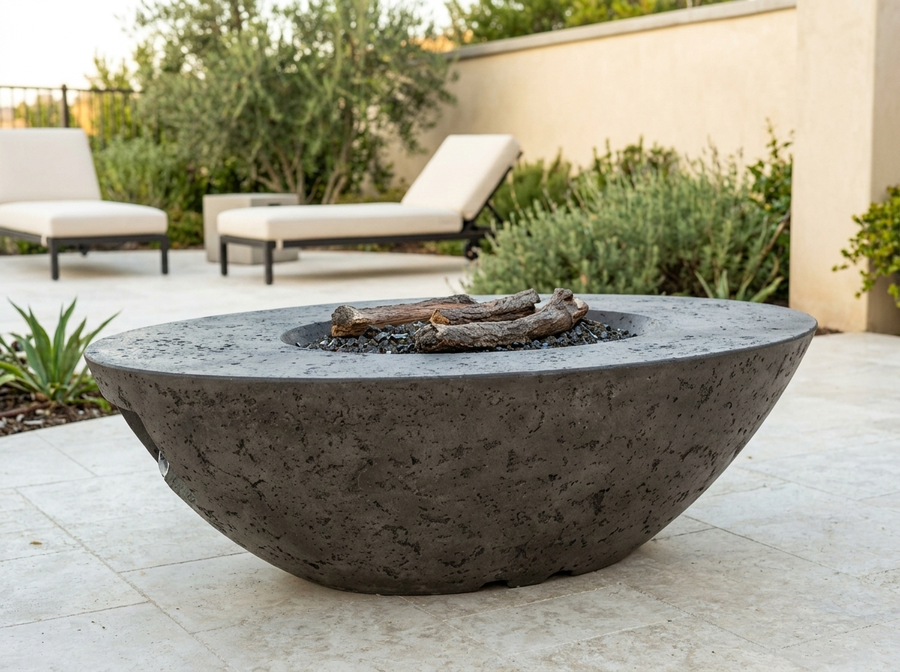
- Round gas fire bowls — classic silhouette for pool surrounds and circular seating; cast in glass-fiber reinforced concrete (GFRC) or spun from hammered copper.
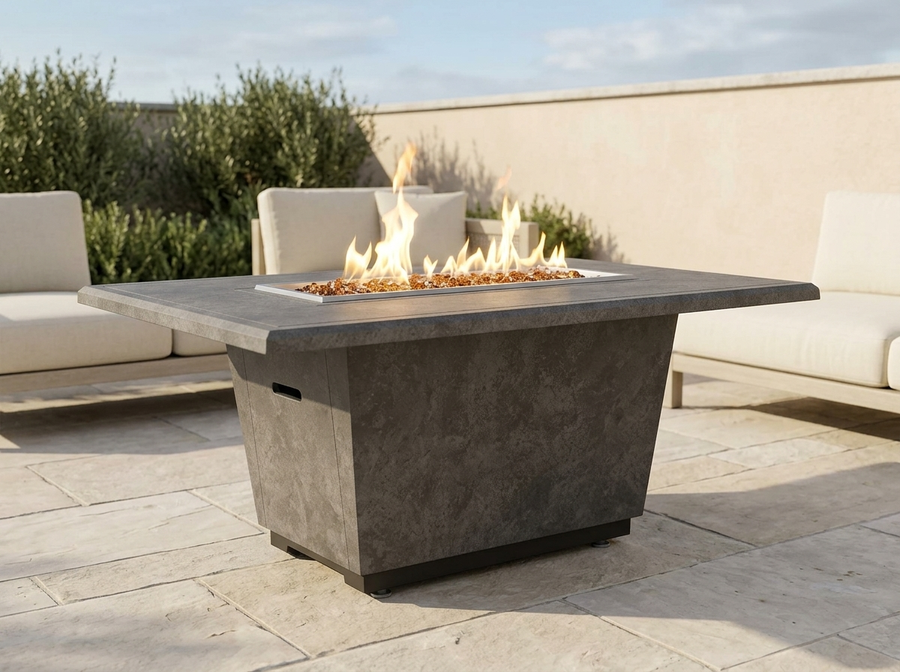
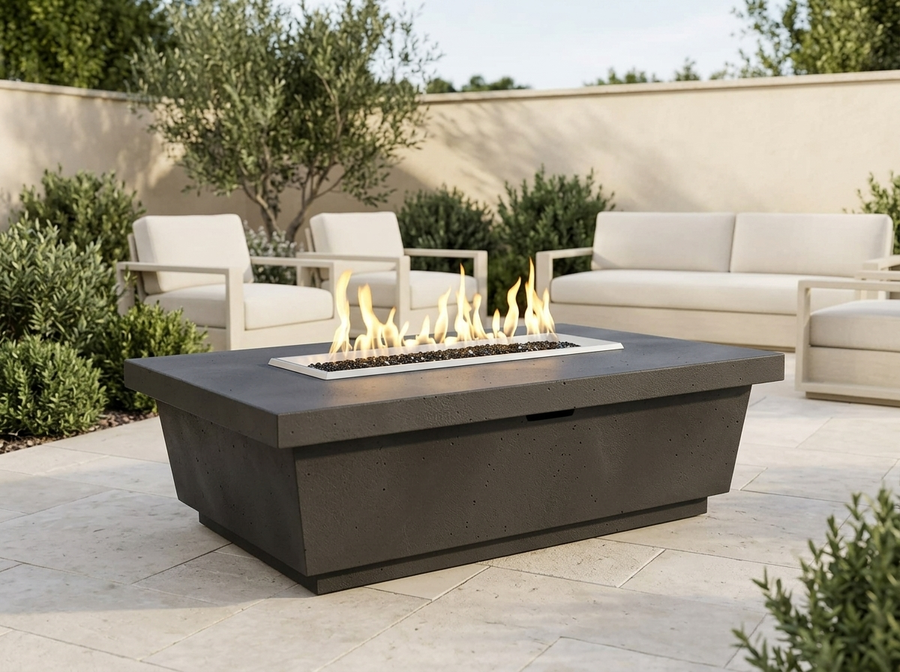
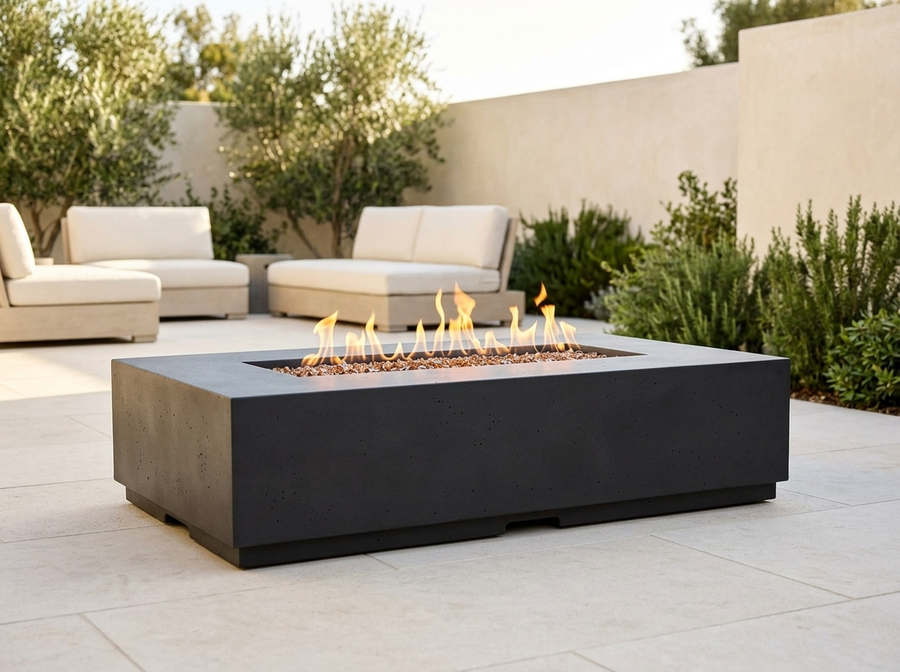
- Rectangle concrete fire pits — linear flame on a low table profile, the anchor piece for modern outdoor lounges.
- Square fire tables — compact footprint that seats guests on all four sides.
GFRC concrete delivers the mass and texture of poured concrete at a fraction of the weight, so it ships to your curb and moves into place without a crane. Copper and stainless models patina and weather gracefully outdoors year-round.
Ignition: match-lit vs. electronic
Match-lit systems are the simple, serviceable standard — light the media with a long match or wand. Electronic ignition adds push-button or switch-based start with flame sensing that re-lights if wind blows the burner out, and is required by code in some jurisdictions for unattended commercial use. Both options appear in the order form where the manufacturer offers them.
Buying from ExceptionalFire
Every fire pit ships free nationwide, and our team verifies fuel type, ignition and media selections on custom-configured orders before they go to production — the same order-verification process we run on our custom fireplace doors. Extending the fire to the indoors? Browse gas logs and custom fireplace doors, all covered by manufacturer warranties we service as an authorized dealer.
Shopping by shape? Browse round gas fire bowls, rectangle fire pit tables and square fire pits & tables — or see every design in fire pit tables.
Good to know
Questions people ask before they order
Do I need a gas line installed?
Yes — natural gas fire pits connect to a permanent gas line, typically run from the home's main supply or a meter set. A licensed gas plumber installs the line and final connection. Average cost runs $300-$900 depending on distance from the supply.
What BTU output do gas fire pits produce?
Typically 40,000-90,000 BTU. Larger pits (over 36 inches across) reach 100,000+ BTU. For comparison, a residential gas furnace runs 60,000-100,000 BTU. The output is enough to heat a 100-200 sq ft seating area effectively.
Are gas fire pits more expensive than propane?
The pit itself is similar in price; gas hookup adds $300-$900 to installation. Operating cost is much lower — natural gas runs $1.20/therm vs. $3-4 for propane. Heavy users save $200-$500/year vs. propane.
Can I convert a natural gas pit to propane (or vice versa)?
Yes — most pits ship with conversion kits or have them available as accessories. The orifice size and pressure regulator change between fuels. A licensed gas plumber should make the conversion to ensure proper combustion and safety.
How long does ignition take?
Electronic ignition starts within 5-10 seconds. Match-light models take 30-45 seconds depending on gas line air-purge time. Most modern pits use electronic ignition with battery backup; manual override is available if the battery dies.
What's the maintenance schedule?
Annual: clean burner ports of debris, check gas line for cracks, replace ignition battery. Every 3-5 years: inspect and replace lava rock or fire glass (decorative and functional). Burner units typically last 10-15 years before replacement.
- Expert Fit Review on every custom orderA specialist checks your measurements before anything is cut.
- Freight & crating includedMade-to-order pieces ship crated, nationwide, at no extra charge.
- Family-owned since 2014Laguna Hills, California. Call and a specialist picks up.
- 4.7 from 721 verified reviewsCollected by Loox from real orders.